How Self-Destructing Messages Work: The Technology Behind Disappearing Text

Sarah Mitchell
23 March 2026
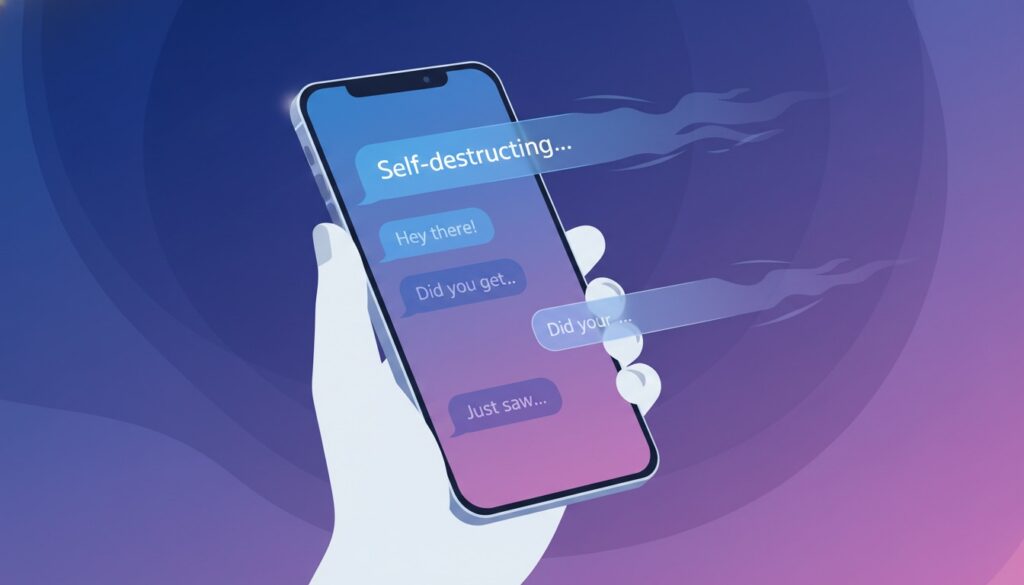
How Self-Destructing Messages Work: The Technology Behind Disappearing Text
Introduction
In an era where digital privacy concerns dominate headlines and data breaches seem commonplace, self-destructing messages have emerged as a powerful tool for secure communication. From Snapchat’s pioneering disappearing photos to Signal’s vanishing texts, this technology has fundamentally changed how we think about digital permanence.
But have you ever wondered what actually happens behind the scenes when a message “self-destructs”? The technology is far more sophisticated than simply hitting delete, involving complex algorithms, encryption protocols, and innovative storage mechanisms that ensure your sensitive information truly vanishes.
In this comprehensive guide, we’ll explore the fascinating world of ephemeral messaging technology, uncovering the intricate processes that make disappearing messages possible and examining why this innovation is reshaping the landscape of digital communication.
The Core Technology: How Messages Actually Disappear
Timer-Based Deletion Systems
At its most basic level, self-destructing messages rely on timer-based deletion systems. These systems work by embedding metadata within each message that specifies its lifespan. When a message is sent, the application creates a timestamp and calculates the exact moment when the content should be permanently removed.
The process typically follows these steps:
- Message creation with embedded timer metadata
- Secure transmission to recipient’s device
- Local storage with deletion countdown
- Automatic purging when timer expires
- Verification of complete data removal
- Perfect Forward Secrecy: Each message uses unique encryption keys
- Key Rotation: Regular automatic updates to encryption keys
- Zero-Knowledge Architecture: Service providers cannot access message content
- Authenticated Encryption: Prevents message tampering during transmission
- Screenshot detection and notification
- Server-side deletion after viewing
- Replay limitations (typically one additional view)
- Story expiration after 24 hours
- Customizable deletion timers (from 30 seconds to 1 week)
- Automatic deletion from all devices
- Integration with voice and video calls
- Open-source code for transparency
- Device-specific encryption keys
- No server storage of message content
- Customizable auto-deletion timers
- Screenshot notifications
- Screenshot detection algorithms
- Watermarking sensitive content
- Screen recording prevention
- Legal deterrents and terms of service
- Maintain synchronized clocks across devices
- Handle offline device scenarios
- Manage network connectivity issues
- Verify deletion completion
- Device memory dumps
- Swap files and temporary storage
- Database journal files
- Cloud backup systems
- Choose reputable platforms with proven security track records
- Enable shortest practical deletion timers for sensitive content
- Verify recipient identity before sending confidential information
- Keep apps updated to benefit from latest security improvements
- Use additional security measures like two-factor authentication
- Robust encryption protocols using industry-standard algorithms
- Comprehensive deletion mechanisms covering all storage locations
- User education features explaining security limitations
- Regular security audits by independent cybersecurity experts
- Transparent privacy policies clearly explaining data handling
- Quantum encryption for unprecedented security
- Blockchain verification of message deletion
- AI-powered content analysis for automatic sensitivity detection
- Biometric authentication for message access
- Mandatory data retention periods for certain communications
- Standardized encryption requirements
- Cross-border cooperation protocols
- Industry-specific compliance standards
Client-Side vs. Server-Side Deletion
One crucial distinction in self-destructing message technology is where the deletion occurs. Client-side deletion happens on individual devices, giving users more control but potentially leaving traces on servers. Server-side deletion removes messages from central servers but may still leave copies on recipient devices.
“The most secure ephemeral messaging systems implement both client-side and server-side deletion simultaneously, ensuring no traces remain anywhere in the communication chain.” – Cybersecurity Expert
Memory Management and Secure Deletion
True message destruction goes beyond simply removing files from visible storage. Advanced systems employ secure deletion techniques that overwrite memory locations multiple times, preventing data recovery through forensic analysis. This process, known as cryptographic shredding, ensures that even sophisticated recovery attempts will fail.
Encryption and Security Protocols
End-to-End Encryption Implementation
Self-destructing messages are only as secure as their underlying encryption. Most reputable platforms use end-to-end encryption (E2E) combined with ephemeral messaging to create a double layer of protection. This means messages are encrypted on the sender’s device and only decrypted on the recipient’s device, with the service provider never having access to readable content.
Key encryption features include:
Digital Signatures and Message Integrity
To prevent malicious actors from intercepting or modifying self-destructing messages, modern systems implement digital signatures. These cryptographic proofs ensure that messages haven’t been altered in transit and verify the sender’s identity.
Metadata Protection
While message content may disappear, metadata (such as timestamps, sender information, and delivery confirmations) can reveal sensitive information. Advanced ephemeral messaging systems employ metadata minimization techniques to reduce the digital footprint of communications.
Platform-Specific Implementations
Snapchat’s Pioneer Approach
Snapchat revolutionized digital communication by introducing the concept of disappearing content to mainstream users. Their implementation focuses on visual content expiration with these key features:
Signal’s Advanced Security Model
Signal takes ephemeral messaging to the next level with disappearing messages that offer granular control:
Telegram’s Secret Chats
Telegram offers self-destructing messages through Secret Chats, which provide:
Technical Challenges and Limitations
The Screenshot Problem
One of the biggest challenges facing self-destructing message technology is the screenshot problem. While messages may delete themselves, recipients can capture content before it disappears. Solutions include:
Device Synchronization Issues
In multi-device environments, ensuring messages disappear from all connected devices simultaneously presents significant technical challenges. Systems must:
Forensic Recovery Concerns
Despite sophisticated deletion mechanisms, forensic recovery remains a potential vulnerability. Advanced data recovery techniques can sometimes retrieve “deleted” information from:
Best Practices for Users and Developers
For Users: Maximizing Message Security
To get the most protection from self-destructing messages, users should:
For Developers: Implementation Guidelines
Developers building ephemeral messaging features should prioritize:
The Future of Ephemeral Messaging
Emerging Technologies
The next generation of self-destructing messages will likely incorporate:
Regulatory Considerations
As ephemeral messaging becomes more prevalent, governments worldwide are grappling with regulatory frameworks that balance privacy rights with law enforcement needs. Future developments may include:
Conclusion
Self-destructing messages represent a fascinating intersection of cryptography, software engineering, and user experience design. While the technology has made remarkable strides in protecting digital privacy, it’s important to understand both its capabilities and limitations.
The core principle remains simple: messages that don’t exist can’t be compromised. However, the implementation requires sophisticated coordination between encryption algorithms, deletion protocols, and user interface design to create truly secure ephemeral communication.
As our digital lives become increasingly complex and privacy concerns continue to grow, self-destructing messages will likely play an even more crucial role in how we communicate. Understanding the technology behind these systems empowers users to make informed decisions about their digital privacy and security.
Take Control of Your Digital Privacy Today
Ready to start using self-destructing messages for your sensitive communications? Begin by downloading a reputable ephemeral messaging app like Signal or exploring the disappearing message features in your current messaging platforms. Remember, the best security tool is the one you actually use consistently.
Share this article with friends and colleagues who care about digital privacy, and stay tuned for more in-depth technology breakdowns that demystify the tools protecting our digital lives.